Ideas and hand-me-downs

So this morning, in a flash of inspiration or gas, I came up with what is seriously the best idea for an SF novel ev-ar.

The plot is trivial, bordering on asinine, but as with all truly Great SF, it’s the concept that sells it, and the concept is this:

The Iliad and the Odyssey turn out to be modern fakes. The hoax was perpetrated [Read more…]
The taste for magic

Why do we hanker for magic? That is a question that the large-C Catholic fantasy writer must squarely face, and the small-c catholic reader ought at any rate to find interesting. The practice of magic as such, whether effective or not, is explicitly forbidden by scripture and canon law, and even too strong a theoretical interest is rather frowned upon. The Catholic attitude towards magic in fiction is more ambiguous. I was absurdly surprised to find, when I myself was converted, that every sort and condition of Christian, practising or pinchbeck, that you can find in the innumerable denominations of Protestantism, can be found in the Catholic Church. We, too, have our would-be book-burners, our crusaders against Harry Potter, our excessive literalists and excessive metaphorists; we even have churchgoers who look like 17th-century Puritans and loudly say ay-men after a prayer, though everyone else in the room is saying ah-men. It is a sufficiently odd mixture.

What I mean is that the same problem faces every fantasy writer in a more or less Christian or post-Christian society, regardless of denomination; it is only that Catholic writers, if they take either their writing or their religion seriously, have less room to shirk the issue. J. R. R. Tolkien wrestled with the question in a nocturnal agony of the spirit. In ‘On Fairy-Stories’ and ‘Leaf by Niggle’ he tries to show that fantasy as such is a thoroughly Christian, even a salvific, activity; but Smith of Wootton Major is a cry from the heart of a man who has lost his confidence, and some of Tolkien’s last writings on Middle-earth almost amount to a confession of heresy. He wasted endless hours trying to uproot the Two Trees of Valinor from The Silmarillion, because he could not reconcile his beautiful and moving myth of the Sun and Moon with post-Copernican astronomy, and (which was for him the salient point) because he could not pretend that the God who made the Elves would allow them to believe a legend so obviously contrary to scientific fact. Yet that legend was the heart of the whole work. For similar reasons he worked and re-worked the story of Galadriel, thinking to make her perfect with emery and holystone, but in truth only reducing her to a plaster saint. The legendarium that he meant as a profound expression of his faith fell to pieces at the rude touch of his theology. [Read more…]

Procrustes the publisher

‘The Children of Húrin’ and the size of books


Yesterday afternoon I received and read my copy of The Children of Húrin, the latest published extract from the formidable corpus of J. R. R. Tolkien’s unfinished work. I intend to write more about this very interesting book soon, but first I want to consider the interesting problem of the format, and what it may imply for the artistic health of commercial fantasy. [Read more…]

The road less travelled by goes ever on

Long ago, I have read, Irving Berlin offered the young and struggling George Gershwin a job as his musical secretary, for the then princely wage of a hundred dollars a week. ‘But don’t take the job,’ said Berlin. ‘If you do, you may develop into a second-rate Berlin. But if you insist on being yourself, someday you’ll become a first-rate Gershwin.’

In the five years since Peter Jackson’s film adaptation of The Lord of the Rings began to be released, there has been a fresh outpouring of critical, academic, and fannish writing dissecting, rehashing, and expanding upon every facet of Tolkien’s work. Probably no other author since Joyce has been subjected to such torrential inquiry; perhaps none since Dickens. If the flow continues a few years longer, Tolkienology may end up second in volume only to the endless study of Shakespeare.

Not all of this outpouring is wasted ink, and some of it is work of exceptional brilliance and inspirational value. I had a flash of insight — even I get flashes of insight from time to time — when I read Tom Shippey’s excellent and audacious Tolkien: Author of the Century. The Afterword on ‘The Followers and the Critics’ changed the whole focus of my thinking with respect to my own work specifically and fantasy in general. [Read more…]

Genesis 3

Reality, responsibility, and ‘The Eye of the Maker’


To admit the fact that contradicts all one’s assumptions is the mark of an honest man.

—David Warren

Whatever you may think of the Hebrew Scriptures as theology or history, they are certainly sound as psychology: far sounder, in fact, than we parochial moderns (who like to believe that the study of the human mind began only with Freud) can admit without considerable abashment.

Eve, then Adam, ate the forbidden fruit: that, we are told, was the first sin. The second sin, which followed immediately, was trying to shift the blame. ‘Eve made me do it,’ said Adam, and ‘The serpent made me do it,’ said Eve. The serpent seems not to have been available for questioning, but if God did in fact track it down and ask for its account of the story, it probably said: ‘I just told them about the fruit. I didn’t pick it.’ There was enough blame to go round, but none of the three guilty parties would accept a proper share of it. So instead there was enough blame to go round . . . and round . . . and round — and it is going round still. [Read more…]

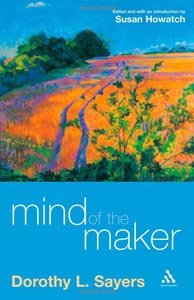
The Mind of the Maker, by Dorothy L. Sayers

Contrary to popular belief, this is not primarily a book about God. Sayers wisely does not try to tell us about God directly, but about what is godlike in ourselves. ‘The characteristic common to God and man,’ she says, is ‘the desire and ability to make things.’ She draws a vivid and detailed analogy between the Christian Trinity and our own creative imagination. In working out the details of this analogy, she tells us a great deal about them both; but, inevitably, more about our own minds than God’s. [Read more…]

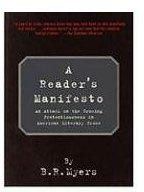
A Reader’s Manifesto, by B. R. Myers

Even before B. R. Myers lobbed this magnificent stinkbomb into the mailbox of the New York literary establishment, I think most of us knew what this book tells us. Yes, the emperor has no clothes; yes, the book reviews will praise the most ridiculous tripe rather than risk losing an advertiser, and the bigger the author’s name, the more blatantly they will cringe and fawn. And yes, too many ‘literary’ authors today have inherited all the pretentiousness of their predecessors, but none of their skills. After all, why learn skills when attitude is so much easier?

For readers, this is pretty good fun, and Myers’ caustic wit makes the journey doubly worthwhile. But for writers, it is a message that we ignore at our peril. [Read more…]

Sturgeon’s Law School

Or, Why do people with good taste create bad art?


Theodore Sturgeon is the sort of unfortunate author who is far better known for a single pithy aphorism than for all his books and stories combined. His brilliant science fiction is seldom reprinted nowadays, as it requires a certain sensibility and flexibility from the reader, and this is an investment that the big reading public just doesn’t want to make. (It doesn’t help that the publishing industry in general is doggedly averse to reprinting old books, but that’s another rant.) The average sf reader today has never read ‘Microcosmic God’ or More Than Human. If he knows Sturgeon at all, it’s likely to be in the context of Sturgeon’s Law:

Ninety percent of science fiction is crud, but then ninety percent of everything is crud.

Many people nowadays say that Sturgeon was being charitable. And that 90 percent figure leaves out all the vast mountains of unpublished fiction, the stuff that is simply too cruddy for anyone to print. But the crud gets written, and some of it gets published, and hardly any of the perpetrators are aware that the stuff they’re trying to inflict on the world is crud.

Crud happens. Why can’t the crudsters tell? [Read more…]